New state and federal bills focus on increasing housing supply — what it could mean for the Lakes Region.
For years, many residents of the Lakes Region have felt the effects of rising home prices and limited choices. Whether it’s young families trying to stay in the area, longtime residents looking to downsize, or workers priced out of the towns where they grew up, finding housing that feels affordable has become increasingly difficult.
This year, however, lawmakers at both the state and federal levels have advanced a series of bills aimed at tackling the root of the problem: a shortage of housing supply. While the proposals differ in scale and detail, they share a common focus — making it easier to build more homes.
National Efforts Target Supply and Cost
In Washington, Congress has moved forward with what could become the most significant federal housing legislation in more than a decade. The 21st Century ROAD to Housing Act combines ideas from both parties and both chambers. The House passed an amended version on May 20 with strong bipartisan support, and the bill is now in the final stages of negotiations between the House and Senate.
The legislation emphasizes increasing housing supply rather than relying solely on subsidies. Among its key provisions are reforms to make manufactured homes easier and less expensive to build and finance, updates to FHA loan limits for multifamily housing, modernization of the HOME program (a major federal funding source for affordable housing), and steps to streamline inspections and reduce regulatory delays.
The bill also includes provisions aimed at limiting large institutional investors from purchasing single-family homes in certain situations. If the final version is approved by both chambers and signed into law, it would mark one of the more coordinated federal attempts in recent years to address housing affordability through increased production.
New Hampshire Takes Its Own Steps
Closer to home, the New Hampshire Legislature tackled similar issues during the 2026 session, with mixed results. One of the more closely watched proposals, HB 1357, would have allowed newly constructed manufactured homes by right in all residential zoning districts, treating them similarly to traditional site-built homes. The bill received support from the House Housing Committee but was ultimately referred to an interim study in March, meaning it will be studied further and could return in a future session.
Lawmakers had more success with updates to rules governing multi-family housing. HB 1010 and HB 1588 refine last year’s law requiring towns to allow residential development in commercial zones. The updated versions give municipalities more flexibility to consider infrastructure capacity while also creating new tools — known as special assessment districts — that allow towns to front the cost of water and sewer infrastructure and repay it through future property taxes generated by new housing.
Several bills expanding opportunities for Accessory Dwelling Units (ADUs), such as in-law apartments or small cottages, also advanced. These changes would make it easier to add housing units on existing properties, including in some commercial areas and non-conforming structures. Many attempts to repeal earlier pro-housing reforms were defeated.
A Different Model: Deeded Manufactured Home Communities
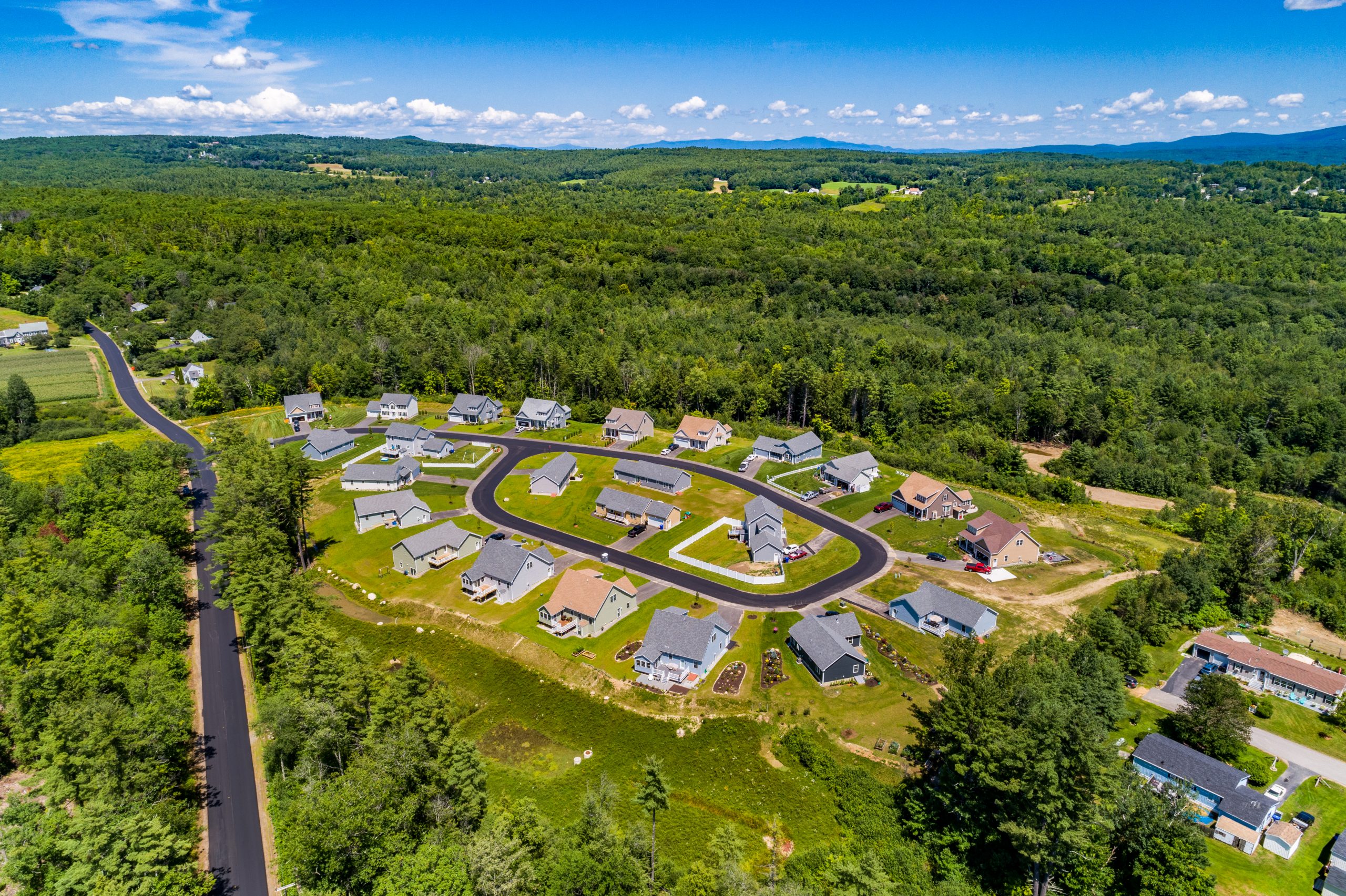
A potential model is the creation of manufactured home communities in which individual lots are deeded directly to homeowners, rather than the traditional model in which residents own their homes but rent the land beneath them. Under the current park model, the cost of infrastructure — roads, water, sewer, and maintenance — is typically passed on to residents through monthly lot rent. In many cases, this lot rent can equal or exceed a second mortgage payment, significantly reducing the overall affordability that originally attracted buyers to manufactured housing in the first place.
A deeded-lot approach would allow buyers to own both the home and the land, building equity in a way that is currently difficult in most manufactured home parks. This model has the potential to make homeownership more attainable for lower-income households and first-time buyers who might otherwise be priced out of traditional single-family housing in the Lakes Region.
However, one of the biggest barriers to creating such communities is the cost of extending public water and sewer infrastructure to support new development. Many suitable parcels of land lack the necessary utilities, making it difficult for developers to move forward without significant upfront investment.
The state could play a meaningful role by partnering with towns and developers to help finance these infrastructure expansions. One approach would be to expand the use of tools like the special assessment districts recently advanced in the Legislature, allowing municipalities to front the cost of water and sewer extensions and recover those costs over time through increased property tax revenue generated by the new homes.
If structured properly, this model could deliver genuinely affordable homeownership. Many manufactured homes are priced well below the cost of site-built housing, making them accessible to a wider range of buyers. Removing the ongoing burden of lot rent — which often functions as a hidden second mortgage — would allow more families to keep their total monthly housing costs manageable while still building long-term equity. For lower-income and first-time homebuyers in the Lakes Region, this could represent one of the more realistic paths to ownership in a market where traditional single-family homes remain out of reach for many.
What It Could Mean Locally
For the Lakes Region, these efforts could eventually open new possibilities, particularly on larger parcels of land and in areas near existing commercial zones. Towns that have faced infrastructure limitations may gain new mechanisms to support growth. Landowners considering development or sale could see additional options, especially if manufactured housing or ADU rules become more flexible over time.
That said, the impact will likely unfold gradually. Most of these changes still require local decisions, and practical factors such as septic capacity, wetlands regulations, and individual town zoning processes will continue to play major roles.
Recent data shows the Lakes Region market remains relatively strong but is showing signs of modest stabilization. Inventory has increased compared to last year, giving buyers slightly more choices, while home prices have continued to rise, though at a slower pace than during the peak years of the pandemic.
Challenges Remain
Supporters of these bills argue they represent meaningful progress toward addressing the housing shortage by focusing on supply. Critics, however, continue to raise concerns about local control, potential impacts on infrastructure, and changes to neighborhood character.
It is also worth noting that even if the federal legislation is finalized, its effects will take time to appear. Housing supply responds slowly to policy changes, and many of the most significant outcomes will depend on how individual communities choose to implement the new rules.
Looking Ahead
Across both Concord and Washington, 2026 has seen increased attention on increasing housing supply as a path toward greater affordability. While no single bill will solve the Lakes Region’s housing challenges overnight, the combination of state-level zoning and infrastructure reforms and potential federal changes represents one of the more active periods of housing policy in recent years.
For local residents, landowners, and town officials, the coming months and years will reveal how these policies translate into real-world results on the ground.

This article was written by Randy Miller. Randy is a Realtor® at Roche Realty Group in Meredith, NH, and can be reached at (603) 279-7046. Please feel free to visit www.rocherealty.com to learn more about the Lakes Region and its real estate market.
FAQ: Affordable Housing Supply in New Hampshire and the Lakes Region
What is causing housing affordability challenges in the Lakes Region?
Housing affordability challenges in the Lakes Region are largely tied to rising home prices, limited housing choices, and a shortage of housing supply. Young families, longtime residents, workers, first-time buyers, and lower-income households are all feeling the impact as traditional single-family homes become harder to afford.
How are federal lawmakers trying to address housing costs?
Federal lawmakers are focusing on increasing housing supply through the 21st Century ROAD to Housing Act. The legislation includes provisions related to manufactured homes, FHA loan limits for multifamily housing, the HOME program, inspection streamlining, regulatory delays, and limits on certain large institutional investors purchasing single-family homes.
What housing changes are being considered in New Hampshire?
New Hampshire lawmakers have considered or advanced bills related to manufactured homes, multi-family housing, residential development in commercial zones, special assessment districts, and Accessory Dwelling Units. These efforts are aimed at making it easier to create more housing while still allowing towns to consider infrastructure capacity and local planning needs.
What are Accessory Dwelling Units?
Accessory Dwelling Units, often called ADUs, are smaller housing units added to existing properties. They may include in-law apartments, small cottages, or units in non-conforming structures. Expanding ADU opportunities could help create more housing choices on properties that already exist.
What is a deeded manufactured home community?
A deeded manufactured home community is a model where homeowners own both the manufactured home and the individual lot beneath it. This differs from the traditional park model, where residents own their homes but rent the land. A deeded-lot approach could help homeowners build equity and reduce the burden of monthly lot rent.
Why is infrastructure important for affordable housing?
Infrastructure, especially public water and sewer, is one of the biggest barriers to creating new housing. Many parcels of land that could support development lack the necessary utilities. Without help financing roads, water, sewer, and maintenance, many affordable housing projects become difficult to move forward.
Could these housing policies help the Lakes Region?
These policies could eventually open new opportunities in the Lakes Region, particularly on larger parcels of land and in areas near commercial zones. However, the impact will likely unfold gradually because local zoning, septic capacity, wetlands regulations, infrastructure needs, and town-level decisions will continue to play major roles.
Will new housing laws solve affordability challenges right away?
No single bill will solve housing affordability challenges overnight. Housing supply responds slowly to policy changes, and many results will depend on how individual communities choose to implement new rules. However, the combination of state-level reforms and potential federal changes represents one of the more active periods of housing policy in recent years.