If you have tried to buy a piece of land in the Lakes Region recently, you likely noticed two things: there is significantly less to choose from, and what is available is moving at lightning speed.
Newly released sales data covering Moultonborough, Tuftonboro, Wolfeboro, Alton, Gilford, Laconia, Meredith, and Center Harbor confirms exactly what many of us have felt on the ground. We are witnessing a fundamental shift in our local market—a transition from the post-pandemic boom to a new era of “high-velocity scarcity.”
Comparing the numbers from 2024 to 2025 reveals a stark trend that helps us predict where we are headed in 2026.
The “Missing” Inventory
The most eye-opening statistic is the sheer drop in volume. In 2024, our region saw 141 land transactions. In 2025, that number plummeted to 91—a decrease of roughly 35%.
Historically, a drop in sales volume often signals a cooling market where buyers have pulled back. However, the data suggests the opposite is true here. Demand hasn’t disappeared; the supply has.
In 2024, the largest tract of land sold was a massive 151 acres. In 2025, the largest sold was just 68.67 acres. The big, legacy parcels of land are vanishing. We are running out of easy inventory, and what remains is being held tightly by long-term owners.
Paying More for Less
Despite high interest rates and elevated construction costs, the “floor” of the market is rising.
2024 Median Sale Price: $150,000
2025 Median Sale Price: $175,000
That is a 16.6% increase in the median price in just one year. While the ultra-luxury ceiling came down slightly (the highest sale dropped from $2.85 million in 2024 to $2.3 million in 2025), the middle of the market is becoming more expensive. Buyers are paying significantly more for smaller parcels, proving that the dream of owning a slice of New Hampshire is still driving fierce competition.
The Inventory Puzzle: Balancing Market Strength with Community Needs
While these numbers indicate a robust real estate market, they also present a structural challenge that we must address if we want to ensure the long-term vitality of our towns.
The Math of the “Starter Home”
The challenge isn’t malice; it’s math. With the median price of a raw lot now hovering around $175,000, the economics of building a modest, “workforce” home have become incredibly difficult.
When the land alone costs nearly $200,000—before site work, septic installation, well, or pouring a foundation—builders are naturally incentivized to construct larger, higher-end homes to justify the initial investment. A developer simply cannot build a $350,000 home for a young family or a local teacher if the dirt under the house accounts for a large portion of the overall budget.
The Condo Conundrum
This economic pressure is driving many developers to pivot toward condominiums. For a builder, the math is simple: if a single lot costs $175,000, building one single-family home on it pushes the final price toward luxury territory. But if they can place four condo units on that same land, the land cost drops to roughly $44,000 per door, making the project viable and the final price more attainable.
There is real demand for this product, too. We have a wave of aging residents looking to downsize and second-home buyers seeking “lock-and-leave” convenience. Yet, the 2025 data reveals a roadblock for this strategy: the disappearance of large tracts. With the largest sold parcel shrinking from 151 acres in 2024 to just 68 acres in 2025, the opportunities for traditional, large-scale condo associations are vanishing. Developers are eager to build the density the market needs, but they are running out of canvas to paint on.
If you drive around Laconia, you will see a wave of new condominium development underway, many of which have high density. It seems like we are entering an overbuilding phase of condos in Laconia vs. single-family homes, which the market is also demanding.
The Path Forward
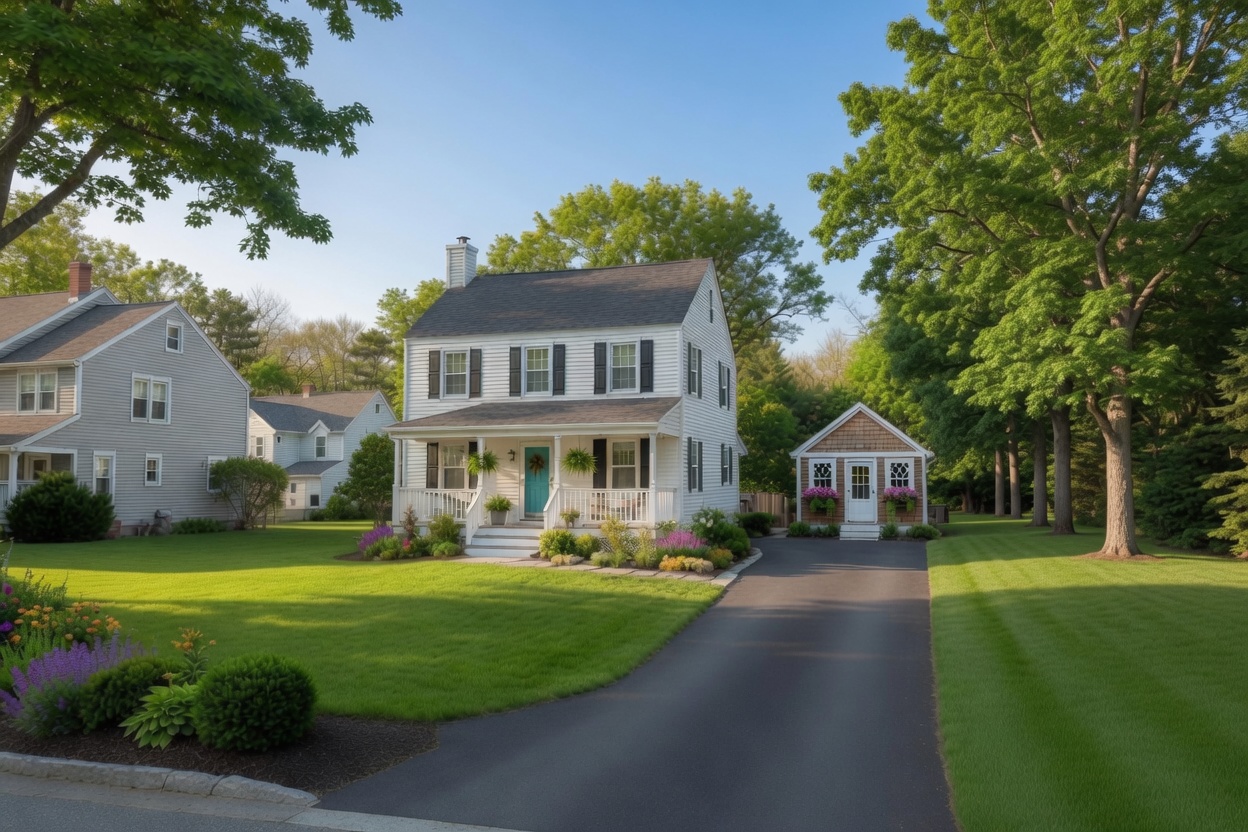
This isn’t a signal to stop development; it’s a signal to get creative. To bridge the gap between high land costs and the need for diverse housing, we may need to look closer at “smart density.” This means revisiting zoning to allow for “pocket neighborhoods” or smaller condo clusters on the sub-10-acre lots that are still available. This will help spur development while leaving the larger tracts intact for conservation.
The Outlook for 2026
So, what does this mean for the year ahead?
If the current trend lines hold, 2026 will likely be defined by the “Scarcity Squeeze.” We can expect transaction volume to remain low—likely fewer than 100 land sales across these eight towns—simply because the inventory isn’t there. Consequently, the median price is poised to push higher, potentially testing the $190,000–$200,000+ range.
For sellers, this is excellent news, provided your land is “build-ready.” With construction costs high, buyers are wary of raw land that requires expensive site work. A lot with a septic design, or a cleared driveway, or permits, will command a premium.
For buyers, the strategy is simple: preparation. In 2024, the median time to sell a piece of land was 30 days. In 2025, that dropped to just 20 days. When a buildable lot hits the market, it is often under contract in less than three weeks. The days of “thinking it over” for a month are effectively over due to a lack of inventory, sadly.
This trend does have its limits. There are currently 63 residential lots for sale across the 8 towns mentioned above (excluding commercial and waterfront). The median days on market is 133 days. While inventory looks plentiful, some lots have lingered—likely due to pricing, site challenges, or other factors making the lot less desirable.
The Bottom Line: Innovation is the New Inventory
As we move deeper into 2026, the numbers tell us that the “easy” land is gone. The era of abundant, affordable acreage in the Lakes Region has passed, replaced by a market defined by speed, scarcity, and a higher price of entry.
For buyers and sellers, this new reality requires agility. But for our communities, it requires vision.
We cannot solve the inventory crisis simply by waiting for more land to appear—we must change how we use the land we have. The recent legislative shifts in New Hampshire, favoring Accessory Dwelling Units (ADUs) and “gentle density,” offer a glimpse of the solution. Additionally, the towns and cities should explore with developers the opportunities for mobile home/modular development in new parks where the lots are owned by the homeowner and not controlled by the community as a rental park.
The market of 2026 is robust, but it is demanding, poised to reward those who are prepared to move fast.

This article was written by Randy Miller. Randy is a sales Associate/Realtor® at Roche Realty Group located in Meredith, and can be reached at (603) 530-1561. Data was compiled from PrimeMLS and is subject to change. Please feel free to visit www.rocherealty.com to learn more about the Lakes Region and its real estate market.
Quick FAQs: Lakes Region Land Sales at a Glance
Why does it feel harder to buy land in the Lakes Region right now?
There is significantly less land available, and what does come on the market is selling quickly. Demand hasn’t disappeared—the supply has.
Are land prices still rising even with high interest rates?
Yes. The median land sale price increased from $150,000 in 2024 to $175,000 in 2025, showing that buyers are paying more for smaller parcels despite higher borrowing and construction costs.
What happened to large parcels of land?
The big, legacy parcels are disappearing. In 2024, the largest tract sold was 151 acres. In 2025, the largest was just 68.67 acres.
Why is it so difficult to build an affordable or workforce home?
When land alone costs close to $175,000—before septic, well, site work, or a foundation—it becomes very difficult to build a modest home without pushing the final price higher.
Why are developers building more condos instead of single-family homes?
Condos allow the land cost to be spread across multiple units, making projects financially viable and final prices more attainable than a single home on one expensive lot.
Is there too much condo development happening?
In places like Laconia, we are seeing a wave of high-density condominium development, which may signal an overbuilding phase compared to the demand for single-family homes.
What does the land market look like heading into 2026?
If current trends hold, land sales volume will likely remain low due to limited inventory, while prices continue to push higher.
What matters most to buyers right now?
Preparation. Buildable lots with septic designs, permits, or cleared driveways are selling quickly and commanding premiums.